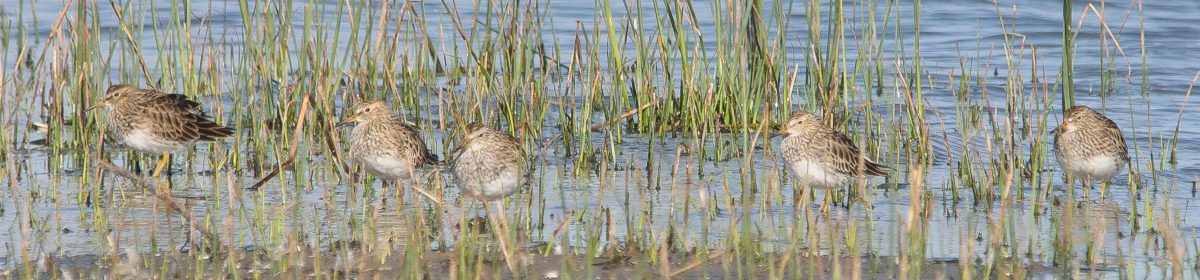
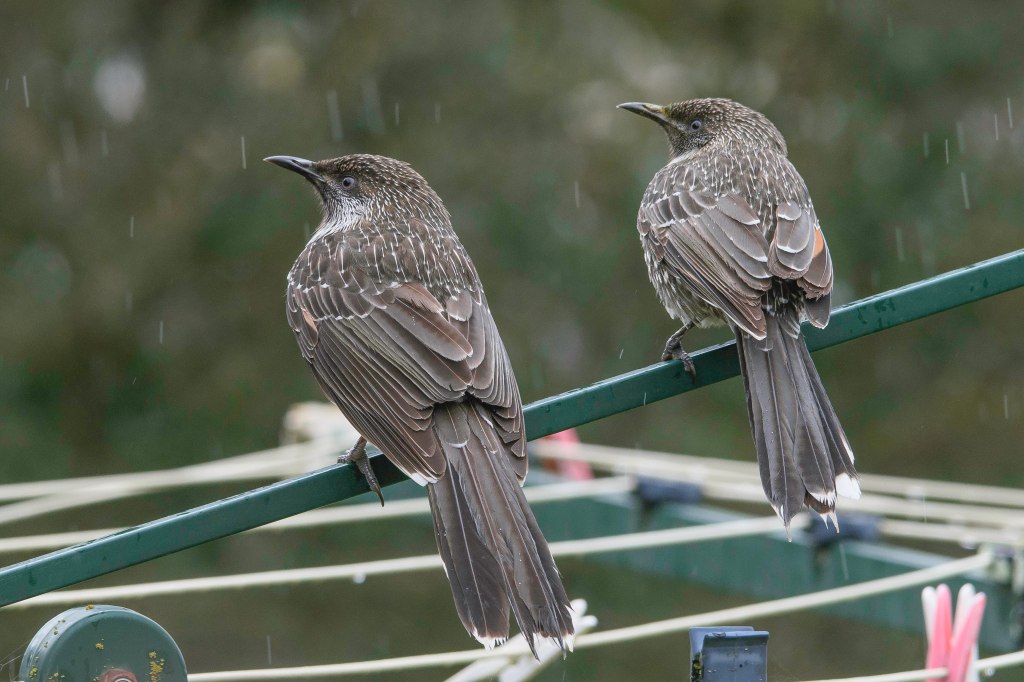
The Little Wattlebird or Brush Wattlebird, Anthochaera chrysoptera, is a somewhat loved and not so loved Aussie native found in many southeastern Australian gardens. It has an aggressively raucous call and territorial behaviour, as well as a heartfelt duet call during Spring.
One of 5 wattlebird species in the genus Anthochaera, which includes the Red Wattlebird found in the southern half of Australia, the Western Wattlebird, found in southwest Western Australia and the Yellow Wattlebird, found in Tasmania and nearby Islands. Also, recent evidence suggests that the rare and endangered Regent Honeyeater belongs in this genus. They can be found in areas of southeastern Australia between Melbourne and Brisbane.
The Little Wattlebird is common and can be dominant in areas throughout southeastern Australia. Occurring in heathlands, coastal woodlands and urban areas, particularly with Banksia, Melaleuca and Grevillea.
Wattlebirds are also members of the honeyeater family, Meliphagidae, and like other honeyeaters, they feed mostly on nectar, obtained with their long, brush-tipped tongue, adapted to probing deep into flowers. At times, they will also eat insects, flowers, berries and seeds.
During Spring the female will construct a scraggly cup of twigs, grass and bark, lined with soft materials, like feathers, wool and shredded bark in a banksia, tea-tree or small eucalyptus, and incubate 1 or 2 spotted earth-toned eggs. Both parents care for the young chicks.
Between 25 and 30 cm, the Little Wattlebird has a grey-brown plumage with white streaks and spots, a long tail with white tips, and lacks the fleshy, colourful lobes of other wattlebird species. Known as sexual size dimorphism, males are noticeably larger than females when compared directly.
They are sometimes mistaken for the closely related, but larger, Red Wattlebird, which is 33 to 37 cm, has red fleshy lobes on the sides of its neck and a yellow patch on its belly.

 Colac Birder