The Whiskered Tern, Chlidonias hybrida, is a migratory and nomadic species of Tern in the Gull, Tern, and Skimmer family Laridae, and among 4 species of Marsh Terns, genus Chlidonias. Marsh Terns prefer freshwater marshes, wetlands, irrigation channels, and swamps. The other 3 Marsh Terns are the White-winged Tern Chlidonias leucopterus, the Black Tern Chlidonias niger, and the Black-fronted Tern Chlidonias albostriatus.
There are 3 disjunct subspecies of Whiskered Tern globally, and they are widespread. The African Whiskered Tern, ssp. delalandii, found in Africa and Madagascar. The Eurasian Whiskered Tern, ssp. hybrida, found across Southern Europe, northwest Africa and Asia, and the Australian Whiskered Tern, ssp. javanicus is found throughout Australia, vagrant to Tasmania, and migratory to Indonesia.
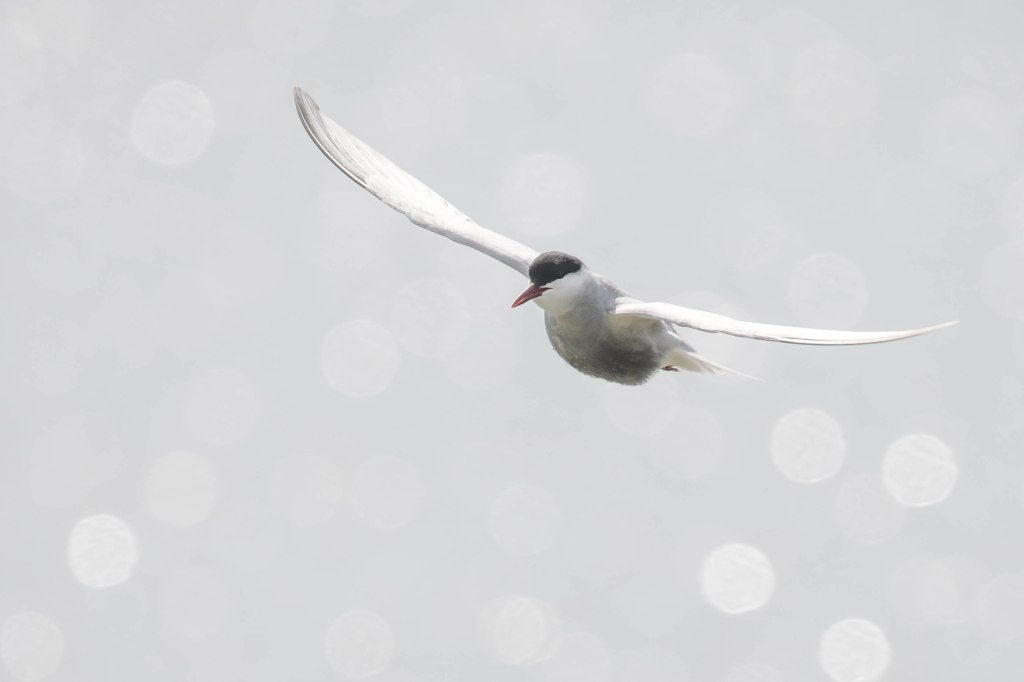
The name Whiskered comes from the illusion of whiskers given by the white cheeks contrasting with the black cap and smoky grey body.
The Whiskered Tern is small and buoyant, with a slightly bulged belly and forked tail. The male is noticeably larger than the female. This size difference, known as sexual size dimorphism, is significant enough that measurements can be used to distinguish males and females.
During breeding, the bill and legs are red, the body is mostly grey and silvery-white, with a dark grey belly. During non-breeding, the bill and legs become darker. The body is mostly faded to a light grey and white, with a faded black cap. Immature birds have a dark checkered patterning on their back, with a tinge of brown and a mottled black cap.
They breed in loose colonies, often in temporary inland swamps and marshes during Spring and other favourable times. The nest is a loose raft of vegetation that sits on the water. The parents share nest-building, incubation and care of the 2-3 young. During the non-breeding season, they are widely nomadic throughout the mainland.
They hunt small fish, crustaceans and insects by hawking a few metres above the surface, searching, then diving into the water or snatching their prey in flight. They also fly low over paddocks, taking insects.
 Colac Birder